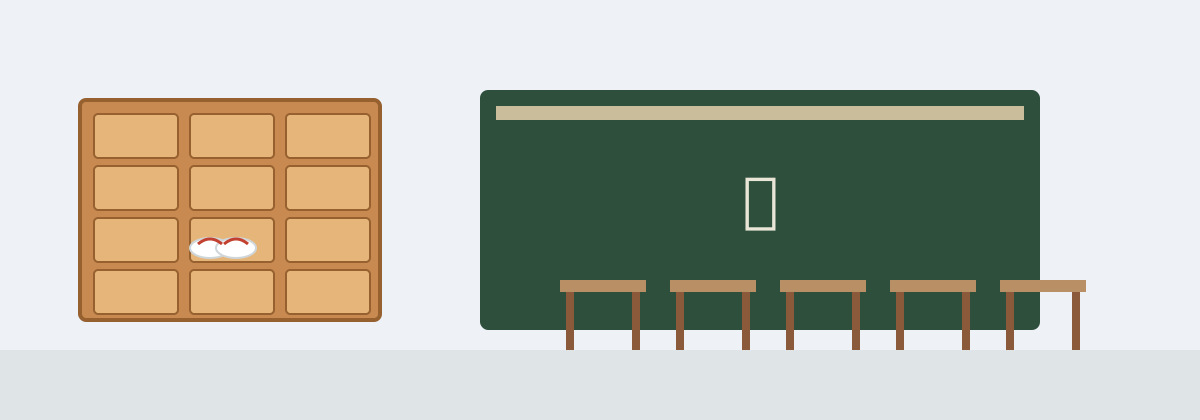
Japanese School Life — Uwabaki, Kyūshoku and Bukatsu
Indoor shoes, school lunches served and cleaned up by the students themselves, and after-school clubs that run until dark — the vocabulary of a Japanese school day.
A Japanese school day runs on rituals that would surprise students elsewhere: shoes get swapped at the entrance, lunch is served and cleaned up by the students on rotation, and the school day often doesn't really end until club activities finish at dusk. These routines are taught explicitly as building responsibility, not just as logistics.
At the school gate
| Word | Reading | Meaning |
|---|---|---|
| 上履き | うわばき uwabaki | indoor shoes, swapped for outdoor shoes at the entrance every single day |
| 下駄箱 | げたばこ getabako | the shoe cubby by the entrance |
| 制服 | せいふく seifuku | school uniform |
| 校則 | こうそく kousoku | school rules, often strict about hair, socks and skirt length |
Lunch, served by the students
給食 (kyūshoku), the standardized school lunch, is delivered to each classroom in bulk trays, and a rotating group of students — wearing white aprons and masks — serves it out to their classmates. Everyone eats together at their desks, and cleanup, including washing the trays, is also a student job. It's one of the clearest daily examples of 掃除 (sōji, cleaning) being treated as part of education, not something outsourced to staff.
School life vocabulary
| Word | Reading | Meaning |
|---|---|---|
| 給食 | きゅうしょく kyuushoku | school lunch |
| 掃除 | そうじ souji | cleaning duty, also done by students, not just at lunch |
| 部活 | ぶかつ bukatsu | after-school club (sports or cultural), often running daily including weekends |
| 文化祭 | ぶんかさい bunkasai | school culture festival |
| 運動会 | うんどうかい undoukai | sports day, a major yearly event with the whole school and often families attending |
Clubs, not classes, define your afternoon
For many students, 部活 defines their social life far more than any class — a student's friend group, daily schedule, and even university applications can hinge on which club they joined in year one. Baseball, brass band, and tea ceremony clubs are all common, and quitting mid-year is socially difficult once you've committed. For a look at how this rigor continues into adult daily habits, see Japan's train culture.
🔊 Tap any word in the vocabulary tables to hear it spoken.
More in Daily Life
- Konbini — Why Japanese Convenience Stores Are a Wonder
- Jidōhanbaiki — Japan's Vending Machine Wonderland
- Trains and the Shinkansen — Riding Japan Like a Local
- Manga and Anime — The Vocabulary Behind Japan's Pop Culture Export
- Omiyage — Japan's Souvenir-Gifting Culture
- Sento — Japan's Neighborhood Public Bathhouses
- Hanko — Japan's Personal Seal Stamps
- Japanese Toilets — The Vocabulary Behind the Buttons
- Japanese Gestures and Body Language
- Kimono — More Than One Kind of Traditional Dress
- Capsule Hotels — A Night in a Box, Explained


