Jidōhanbaiki — Japan's Vending Machine Wonderland
One machine for every 30 people: hot coffee in a can, cold tea, ramen, and the reason they're on every quiet street corner. How to read and use them.
Japan has roughly one 自動販売機 (jidōhanbaiki, vending machine) for every thirty people — about four million of them, humming on street corners, mountain trails and empty train platforms. The reasons are very Japanese: extremely low crime (nobody vandalizes them), a cash-loving culture, high labor costs, and a genuine love of small automated convenience.
Vending machine vocabulary
| Word | Reading | Meaning |
|---|---|---|
| 自動販売機 | じどうはんばいき jidouhanbaiki | vending machine (short form: 自販機 jihanki) |
| お茶 | おちゃ ocha | green tea (sold cold and unsweetened) |
| 水 | みず mizu | water |
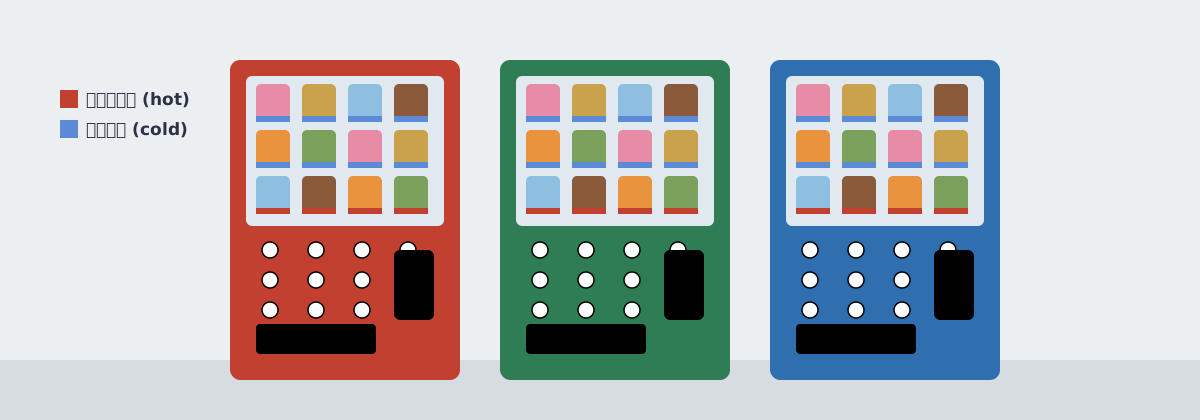
| 温かい | あたたかい atatakai | hot (shown in red on the machine) |
| 冷たい | つめたい tsumetai | cold (shown in blue) |
| お釣り | おつり otsuri | change |
| 売り切れ | うりきれ urikire | sold out |
| 小銭 | こぜに kozeni | coins / small change |
Hot coffee from a machine
The magic trick foreigners love: many drink machines serve hot beverages as well as cold. A red 温かい (atatakai, warm) label under a can of coffee or corn soup means it comes out hot — a lifesaver in winter. Blue 冷たい (tsumetai, cold) is the summer default. Most machines take coins, ¥1000 notes, and increasingly IC cards like Suica (just tap).
Beyond drinks
Drinks dominate, but you'll also find machines selling hot ramen, ice cream, umbrellas, fresh eggs, dashi stock, flowers, and — in famous novelty spots — almost anything. On a hot mountain hike or a deserted midnight platform, the glowing 自販機 is a small miracle of Japanese infrastructure. The kanji 水 (water) and 茶 (tea) are the two you'll press most.
🔊 Tap any word in the vocabulary tables to hear it spoken.
More in Daily Life
- Konbini — Why Japanese Convenience Stores Are a Wonder
- Trains and the Shinkansen — Riding Japan Like a Local
- Japanese School Life — Uwabaki, Kyūshoku and Bukatsu
- Manga and Anime — The Vocabulary Behind Japan's Pop Culture Export
- Omiyage — Japan's Souvenir-Gifting Culture
- Sento — Japan's Neighborhood Public Bathhouses
- Hanko — Japan's Personal Seal Stamps
- Japanese Toilets — The Vocabulary Behind the Buttons
- Japanese Gestures and Body Language
- Kimono — More Than One Kind of Traditional Dress
- Capsule Hotels — A Night in a Box, Explained