Trains and the Shinkansen — Riding Japan Like a Local
IC cards, silent carriages, the bullet train that's never late: how Japanese rail works, the etiquette that keeps it calm, and the station vocabulary you need.
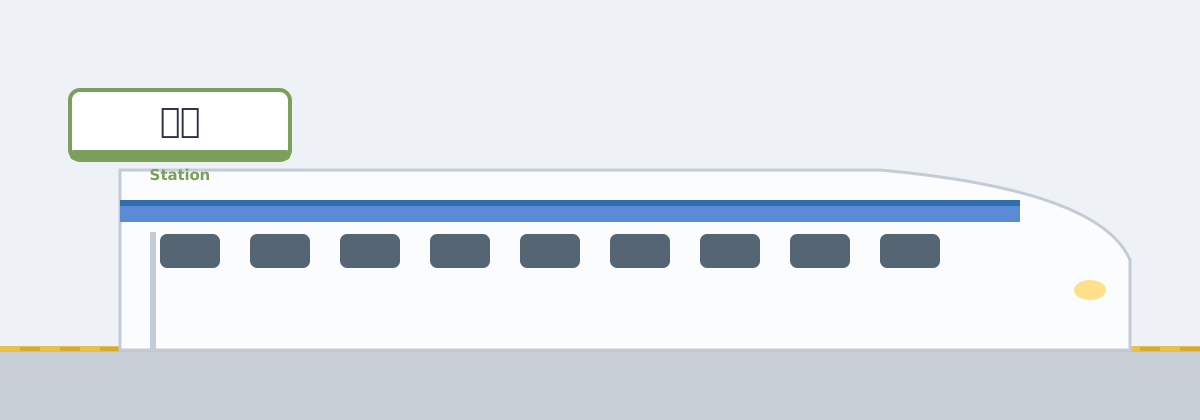
Japan runs on rails. Trains are punctual to the minute, spotless, and reach almost everywhere; a delay of five minutes earns a formal apology. At the top sits the 新幹線 (Shinkansen, bullet train), gliding between cities at 300 km/h with an average delay measured in seconds per year. Learning to ride confidently unlocks the whole country.
Train vocabulary
| Word | Reading | Meaning |
|---|---|---|
| 駅 | えき eki | station |
| 電車 | でんしゃ densha | train (commuter/local) |
| 新幹線 | しんかんせん shinkansen | bullet train |
| 切符 | きっぷ kippu | ticket |
| 改札 | かいさつ kaisatsu | ticket gate |
| 乗り換え | のりかえ norikae | transfer / change trains |
| 各駅停車 | かくえきていしゃ kakuekiteisha | local train (stops at every station) |
| 特急 | とっきゅう tokkyuu | limited express (skips most stations) |
Tap and go with IC cards
Forget paper tickets for daily travel: get an IC card (Suica, PASMO, ICOCA and friends), charge it with cash, and just tap at the 改札 gate. The same card works on trains, buses and at convenience stores nationwide. For the Shinkansen and long-distance trains you still buy a reserved seat (指定席) or ride non-reserved (自由席). Tourists can buy the Japan Rail Pass for unlimited long-distance travel.
The etiquette of silence
A rush-hour Tokyo train can be packed body-to-body yet nearly silent. The unwritten rules: set your phone to マナーモード (silent mode) and don't take calls; keep conversations low; give up 優先席 (priority seats) for the elderly, pregnant and disabled; and line up in the marked spots on the platform, letting people off before you board. Follow the crowd and you'll get it instantly. Two must-know kanji: 駅 (station) and 電 (electric — as in 電車).
🔊 Tap any word in the vocabulary tables to hear it spoken.
More in Daily Life
- Konbini — Why Japanese Convenience Stores Are a Wonder
- Jidōhanbaiki — Japan's Vending Machine Wonderland
- Japanese School Life — Uwabaki, Kyūshoku and Bukatsu
- Manga and Anime — The Vocabulary Behind Japan's Pop Culture Export
- Omiyage — Japan's Souvenir-Gifting Culture
- Sento — Japan's Neighborhood Public Bathhouses
- Hanko — Japan's Personal Seal Stamps
- Japanese Toilets — The Vocabulary Behind the Buttons
- Japanese Gestures and Body Language
- Kimono — More Than One Kind of Traditional Dress
- Capsule Hotels — A Night in a Box, Explained