Manga and Anime — The Vocabulary Behind Japan's Pop Culture Export
Furigana, honorifics in subtitles, and the reading direction that trips up every beginner — the practical vocabulary of manga and anime culture.
For many learners, manga and anime are the reason they started studying Japanese in the first place — and they're also a genuinely useful learning tool, since manga pages print furigana (ふりがな) reading guides over kanji, making it one of the most beginner-friendly authentic texts available.
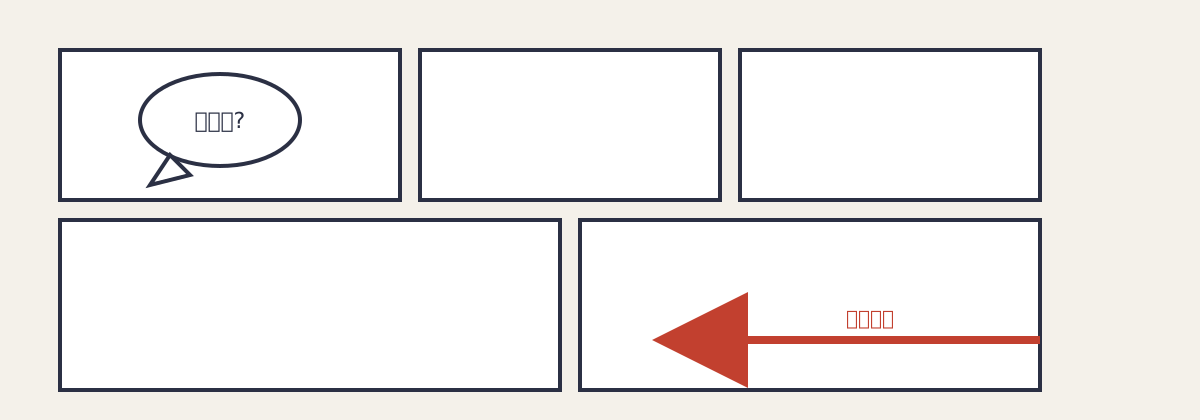
Reading manga
| Word | Reading | Meaning |
|---|---|---|
| 漫画 | まんが manga | manga, Japanese comics |
| 振り仮名 | ふりがな furigana | the small kana reading printed above/beside kanji |
| コマ | コマ koma | a panel (single frame of a page) |
| 吹き出し | ふきだし fukidashi | a speech bubble |
Right to left, back to front
Traditional manga reads right-to-left and top-to-bottom within a page, and the book itself opens from what Western readers would call the “back cover.” Sound effects are often hand-drawn directly into the artwork rather than set in a speech bubble — see gion-go and gitai-go — which is part of why manga sound effects are so hard to translate cleanly.
Anime & fandom vocabulary
| Word | Reading | Meaning |
|---|---|---|
| 声優 | せいゆう seiyuu | voice actor |
| 主人公 | しゅじんこう shujinkou | protagonist, main character |
| 原作 | げんさく gensaku | the original source material (the manga a show is based on) |
| オタク | オタク otaku | a passionate, deeply invested fan (otaku) |
A gateway into real Japanese
Because dialogue is written the way people actually speak — contractions, slang, sentence-ending particles — anime is often where learners first encounter casual Japanese that textbooks skip. Watching with Japanese subtitles rather than a dub is a common next step once the basics feel comfortable.
🔊 Tap any word in the vocabulary tables to hear it spoken.
More in Daily Life
- Konbini — Why Japanese Convenience Stores Are a Wonder
- Jidōhanbaiki — Japan's Vending Machine Wonderland
- Trains and the Shinkansen — Riding Japan Like a Local
- Japanese School Life — Uwabaki, Kyūshoku and Bukatsu
- Omiyage — Japan's Souvenir-Gifting Culture
- Sento — Japan's Neighborhood Public Bathhouses
- Hanko — Japan's Personal Seal Stamps
- Japanese Toilets — The Vocabulary Behind the Buttons
- Japanese Gestures and Body Language
- Kimono — More Than One Kind of Traditional Dress
- Capsule Hotels — A Night in a Box, Explained