Sumo — Rituals, Ranks and the Words of the Dohyō
Salt thrown in the air, matches decided in seconds, a living Edo-period hierarchy: how to watch sumo and actually understand it.
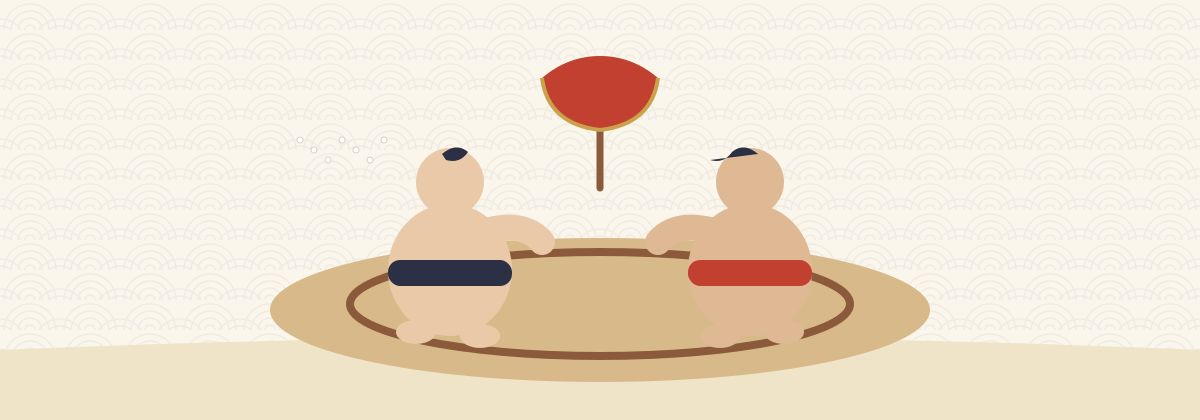
相撲 (sumō) looks simple — force your opponent out of the ring or make him touch the ground — and most bouts end in under ten seconds. But around those seconds is an entire preserved world: Shintō rituals, Edo-period hairstyles, a strict living hierarchy, and six fifteen-day tournaments a year broadcast live on NHK. It's the easiest Japanese tradition to enjoy from your sofa.
Sumo vocabulary
| Word | Reading | Meaning |
|---|---|---|
| 相撲 | すもう sumou | sumo wrestling |
| 力士 | りきし rikishi | wrestler — lit. “man of strength” |
| 横綱 | よこづな yokozuna | grand champion, the top rank |
| 土俵 | どひょう dohyou | the clay ring |
| 場所 | ばしょ basho | tournament (e.g. 初場所, the New Year tournament) |
| 稽古 | けいこ keiko | training/practice — the same word as our quiz rank! |
| ちゃんこ鍋 | ちゃんこなべ chankonabe | the protein-rich hot pot wrestlers live on |
| 行司 | ぎょうじ gyouji | the referee in gorgeous period costume |
Why the salt?
Before each bout, wrestlers throw handfuls of salt to purify the ring and stamp their feet to crush evil spirits — the dohyō is treated as sacred ground. The pre-match staring, squatting and re-throwing of salt can take minutes and is pure psychological warfare; the crowd loves a wrestler who throws his salt theatrically high.
How to read a tournament
Fifteen days, one bout per wrestler per day; eight wins (勝ち越し, kachi-koshi) means promotion, seven-or-fewer (負け越し) means demotion. The banzuke ranking sheet is still printed in Edo-style calligraphy. A 横綱 who can no longer win big is expected to retire — the rank can rise but never fall, which is why there are sometimes none at all. Watch for the final weekend of any 場所: that's when championships are decided. The kanji 力 (strength) and 勝 (win) carry the whole sport.
🔊 Tap any word in the vocabulary tables to hear it spoken.
More in History & Tradition
- Reiwa, Shōwa, Meiji — How Japanese Era Names Work
- Sun, Moon and Five Elements — The Japanese Days of the Week
- The Twelve Zodiac Animals (Eto) — Why Everyone Knows Your Birth Year
- Matsuri — Japanese Festivals, from Mikoshi to Fireworks
- Oshōgatsu — How Japan Celebrates New Year
- Japanese Castles — Reading Himeji, Osaka and the Words on the Walls
- Japanese History in Ten Periods — From Jōmon Pottery to Reiwa
- Shrines and Temples — How to Visit Respectfully
- Seijin Shiki — Japan's Coming-of-Age Ceremony
- Origami — The Art of Folding Paper
- Obon — Japan's Summer Festival for Ancestors
- Shodo — The Art of Japanese Calligraphy