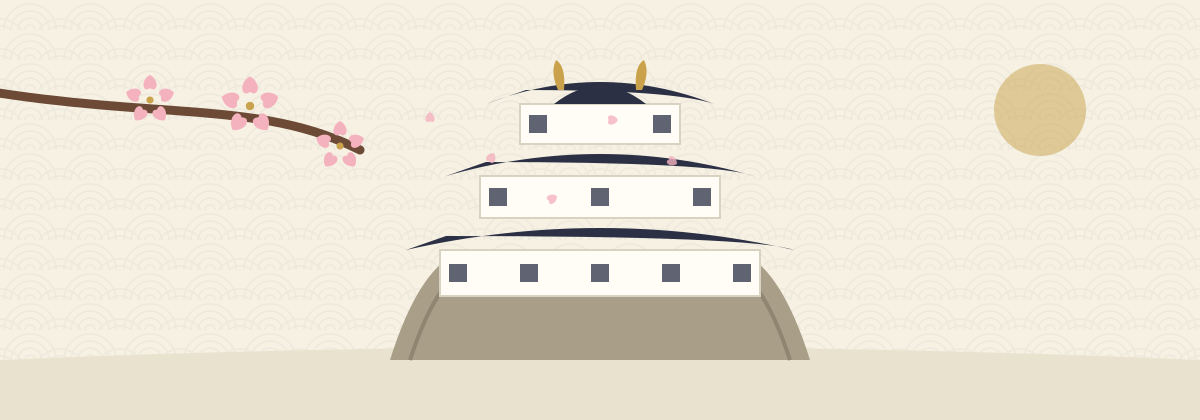
Japanese Castles — Reading Himeji, Osaka and the Words on the Walls
White herons, black crows and stone walls that survived everything: how Japanese castles work and the vocabulary for visiting one.
A Japanese 城 (shiro, castle) is not a European fortress of dark stone halls — it's a soaring wooden tower on cyclopean stone walls, built for the Sengoku civil wars and perfected just as peace made it obsolete. Twelve original keeps survive; the most famous, Himeji, is nicknamed 白鷺城 (White Heron Castle) for its white plaster wings. Osaka and Nagoya are magnificent concrete reconstructions — still worth the climb.
Castle vocabulary
| Word | Reading | Meaning |
|---|---|---|
| 城 | しろ shiro | castle (as a suffix read -jō: 大阪城 Ōsaka-jō) |
| 天守閣 | てんしゅかく tenshukaku | the main keep/tower |
| 石垣 | いしがき ishigaki | stone walls — often original even when the keep is not |
| 堀 | ほり hori | moat |
| 城下町 | じょうかまち joukamachi | castle town — the district that grew at its feet |
| 殿様 | とのさま tonosama | the lord of the castle |
| しゃちほこ | しゃちほこ shachihoko | the golden tiger-fish ornaments on the roof |
Castles are defense puzzles
The approach to any keep zigzags deliberately: attackers had to make repeated hairpin turns under fire from arrow slits and stone-drop windows, through gates designed as kill boxes. Walk Himeji's path and you'll notice you keep turning away from the tower you can see — that disorientation is the design. The elegant curves of the stone walls (called 扇の勾配, “folding-fan slope”) also made them nearly unclimbable.
White castles, black castles
White plaster (Himeji) resisted fire and showed wealth in the peaceful Edo era; black lacquered boards (Matsumoto, nicknamed the Crow Castle) belong to the earlier war years. Under the eaves, look for family crests (家紋) of the lords — castles changed hands, and the crests kept score. For the historical backdrop, see Japanese history in ten periods; the kanji 城 appears in city names all over Japan (宮城, 茨城…), a fossil record of where castles once stood.
🔊 Tap any word in the vocabulary tables to hear it spoken.
More in History & Tradition
- Reiwa, Shōwa, Meiji — How Japanese Era Names Work
- Sun, Moon and Five Elements — The Japanese Days of the Week
- The Twelve Zodiac Animals (Eto) — Why Everyone Knows Your Birth Year
- Matsuri — Japanese Festivals, from Mikoshi to Fireworks
- Oshōgatsu — How Japan Celebrates New Year
- Sumo — Rituals, Ranks and the Words of the Dohyō
- Japanese History in Ten Periods — From Jōmon Pottery to Reiwa
- Shrines and Temples — How to Visit Respectfully
- Seijin Shiki — Japan's Coming-of-Age Ceremony
- Origami — The Art of Folding Paper
- Obon — Japan's Summer Festival for Ancestors
- Shodo — The Art of Japanese Calligraphy