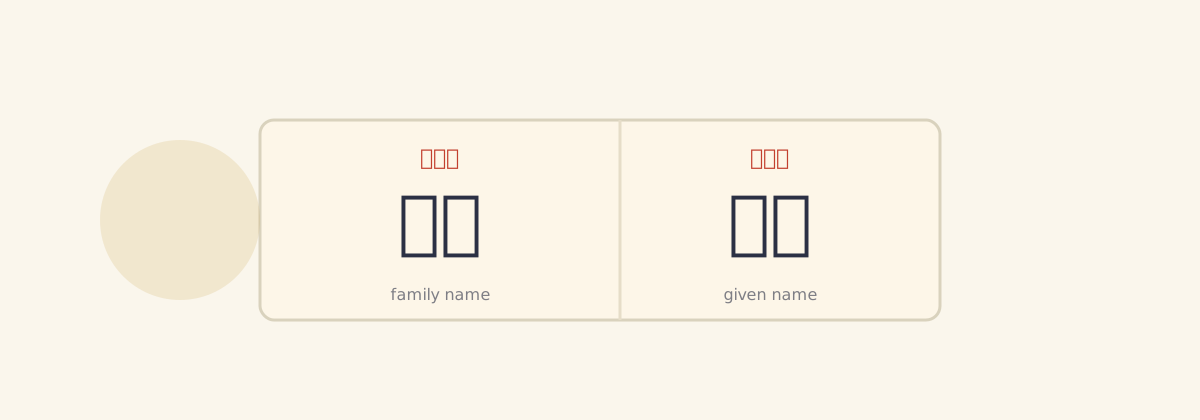
How Japanese Names Work — Family Name First
Why Japanese names are said family-name-first, why the same kanji can be read several different ways, and the vocabulary for talking about names.
A Japanese name is written and spoken family-name-first: 田中太郎 (Tanaka Tarō) is Mr. Tanaka of the Tarō given name, not the other way around. Many official English-language documents and media outlets reverse this to match Western order, which is exactly why the same public figure's name can appear in two different orders depending on the source.
Talking about names
| Word | Reading | Meaning |
|---|---|---|
| 名字 / 苗字 | みょうじ myouji | family name, surname |
| 名前 | なまえ namae | name — often just the given name in context, or “name” broadly |
| 下の名前 | したのなまえ shitanonamae | given name specifically (“the name below,” since it's written second) |
| フルネーム | ふるねーむ furune-mu | full name (family + given), a loanword used in casual speech |
One kanji, several possible readings
Kanji used in names often have special readings — called 名乗り (nanori) — that don't appear in ordinary dictionaries. The character 太 can appear in names read as tai, ta, or futo, among others, so it's genuinely common for Japanese people to ask each other how to read an unfamiliar name. This is also why name cards, forms, and personal seals so often carry furigana.
Reading and writing a name
| Word | Reading | Meaning |
|---|---|---|
| 読み方 | よみかた yomikata | how to read something (a name, a kanji, a word) |
| ふりがな | ふりがな furigana | small phonetic hints written above kanji to show its reading |
| 名付ける | なづける nazukeru | to name (a child, a pet, a product) |
| 同姓同名 | どうせいどうめい douseidoumei | having the exact same full name as someone else |
A short list of very common surnames
A handful of family names cover a large share of the population: 佐藤 (Satō), 鈴木 (Suzuki), 高橋 (Takahashi), 田中 (Tanaka), and 渡辺 (Watanabe) are consistently among the most common. Recognizing these on sight is a small but genuinely useful piece of everyday reading practice.
🔊 Tap any word in the vocabulary tables to hear it spoken.