Tanabata — the Star Festival of Wishes (七夕)
Two lovers allowed to meet once a year across the Milky Way, wishes tied to bamboo, and streets full of paper decorations: the story and words of Japan's July star festival.
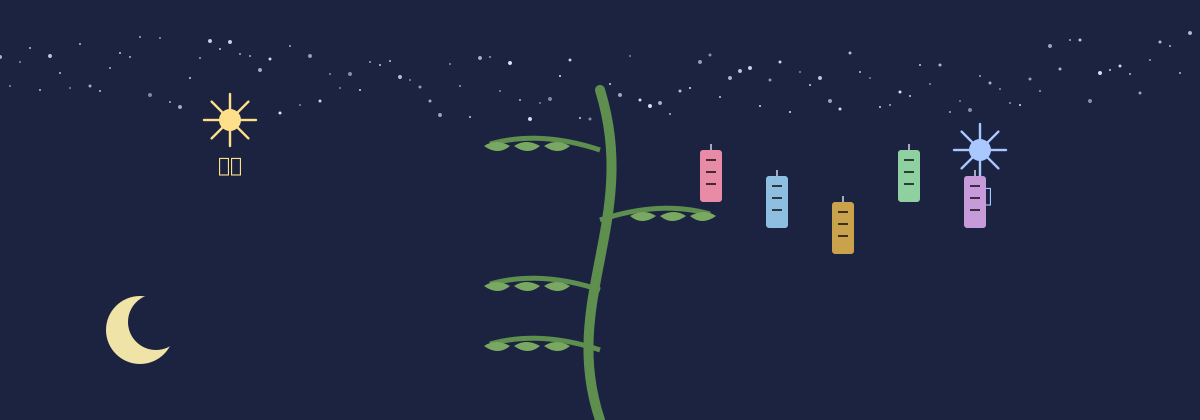
Every July 7th, Japanese people write wishes on strips of colored paper and tie them to bamboo branches. This is 七夕 (Tanabata), the Star Festival, based on a Chinese legend: the weaver princess Orihime (the star Vega) and the cowherd Hikoboshi (Altair) fell so deeply in love that they neglected their work, and were banished to opposite banks of the 天の川 (Milky Way). They may cross to meet only once a year — if the sky is clear.
Tanabata vocabulary
| Word | Reading | Meaning |
|---|---|---|
| 七夕 | たなばた tanabata | the Star Festival (July 7) |
| 星 | ほし hoshi | star |
| 天の川 | あまのがわ amanogawa | the Milky Way — lit. “river of heaven” |
| 願い事 | ねがいごと negaigoto | a wish |
| 短冊 | たんざく tanzaku | the strip of paper you write a wish on |
| 笹 | ささ sasa | bamboo grass (where wishes are hung) |
| 織姫 | おりひめ orihime | Orihime, the weaver princess (the star Vega) |
| 彦星 | ひこぼし hikoboshi | Hikoboshi, the cowherd (the star Altair) |
Writing a wish
Schools, stations and shopping streets set up bamboo where anyone can hang a 短冊. Wishes range from the earnest (家族が元気でありますように — “may my family stay healthy”) to the very practical (テストに合格しますように — “may I pass the exam”). The set ending 〜ように (“may it be that…”) is worth learning just for this. Children's wishes for ice cream hang next to adults' hopes for world peace, which is the charm of it.
Regional giants
While most Tanabata is small and local, some cities go enormous: Sendai's festival (in August by the old calendar) drapes whole shopping arcades in giant paper streamers, and Hiratsuka near Tokyo draws millions. Look up and you'll see the seven traditional decorations, each with its own meaning — paper kimono for good sewing, paper cranes for family long life, and a purse shape for wealth. The kanji are pure night sky: 星 (star) and 川 (river).
🔊 Tap any word in the vocabulary tables to hear it spoken.
More in Seasons & Nature
- The Four Seasons in Japanese — shiki (四季)
- Sakura and Hanami — Japan's Cherry Blossom Culture
- Tsuyu — Japan's Rainy Season (梅雨)
- Kōyō and Momijigari — Autumn Leaves in Japan
- The 72 Microseasons of the Old Japanese Calendar
- Onsen — Japan's Hot Spring Culture, Explained
- Kotatsu, Mikan and the Japanese Winter at Home
- Hanabi — Japan's Summer Fireworks Culture


